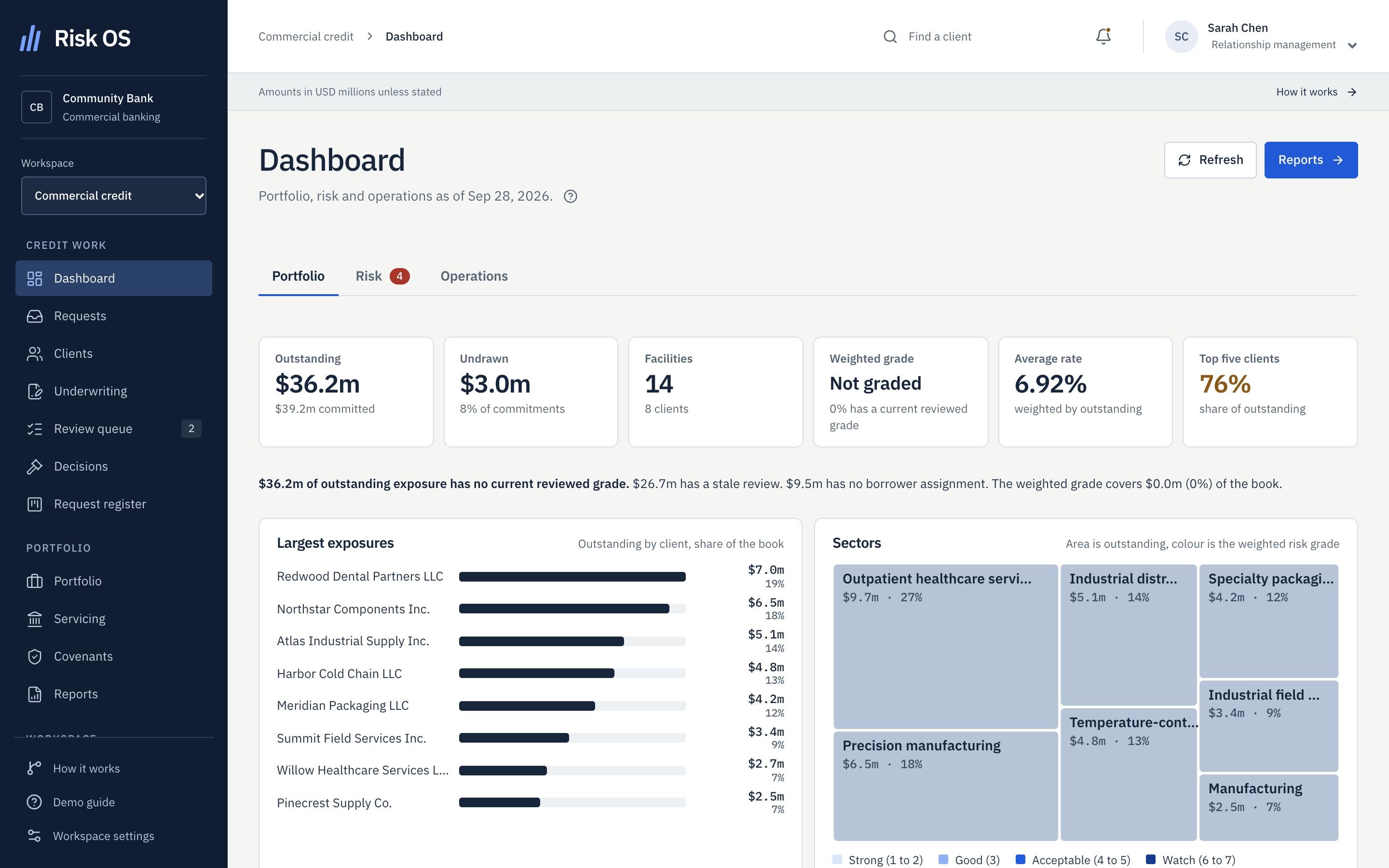
What is commercial loan risk rating?
A risk rating, or risk grade, is the lender's view of how likely a borrower is to repay as agreed. Most banks and credit unions use a numbered scale, with pass grades at one end and special mention, substandard, doubtful and loss at the other. The grade drives approval authority, pricing, monitoring frequency and how the loan is treated in the bank's reserve process.
Grades are usually built from financial factors such as debt service coverage, leverage and liquidity, plus judgment factors such as management, industry and collateral. A grade is only as good as the information behind it and how recently it was checked.
Why risk grades drift
The hard part is keeping the grade current, not assigning it once. Borrower financials change, terms get modified and collateral values move, but the grade in the system often stays where it was set at origination. When a reviewer overrides a scorecard result, the reason is sometimes left in an email or a margin note instead of beside the grade.
- Grades are not revisited when the facts behind them change
- Overrides lack a recorded rationale and evidence
- Calculated and assigned grades are mixed together
- Review dates are tracked in separate spreadsheets
How Aarvion handles risk grading
Aarvion calculates a proposed grade from the confirmed spread, policy tests, collateral evidence and debt service schedule. That calculated grade is kept separate from the assigned grade, which only a reviewer can set.
When a reviewer assigns a grade, Aarvion records the reviewer, the rationale, the supporting evidence, the effective date and the review due date. If the financials, terms, evidence or debt schedule change later, the assignment is marked stale. Approval requires a current assignment, so a decision cannot go forward on a grade that no longer matches the file.
What stays with your reviewer
The assigned grade is a human decision. Aarvion shows what the calculation suggests and why, but the reviewer decides, and can disagree. When they do, the rationale and evidence sit next to the grade instead of in a separate note.
Every AI action is checked against your bank's own credit rules: allowed, held for the right signer, blocked, or all AI stopped. Each decision is recorded with who proposed it, which rule applied, who approved it and when.
How grades connect to approval and monitoring
The worst grade on a request, along with total exposure, determines who can approve it under your delegated authority matrix. After booking, grades feed the portfolio monitor, which ranks borrowers by review priority and risk signals, and the annual review, which revisits the grade with fresh financials.
Aarvion is built for credit teams at banks, credit unions and commercial lenders. It works alongside your loan platform and core banking system. A 90-day pilot on one workflow and one loan segment is the usual starting point.
Commercial Credit
Credit memo software that drafts from your confirmed spread
Commercial Credit
Credit approval workflow built on your delegated authority
Commercial Credit
Annual loan review software that drafts reviews before they're due
Guide · 6 min read
How to Write a Credit Memo: Outline, Template and Tips
Guide · 6 min read
Annual Loan Review Checklist for Commercial Loans