What is commercial loan spreading?
Spreading is the work of moving a borrower's financial statements into a standard format so a credit team can analyze them. An analyst takes tax returns, audited or reviewed statements, interim results and personal financial statements, then maps each line into the bank's own chart of accounts. The result is a side-by-side view of several periods that shows revenue, margins, leverage, liquidity and cash flow in the same terms for every borrower.
A good spread is the base for everything that follows. Debt service coverage, policy tests, the risk grade and the credit memo all depend on it. If a number is wrong in the spread, it is wrong everywhere downstream.
Why spreading still takes days
Most of the time goes to finding, retyping and reconciling, not to analysis. Statements arrive as scanned PDFs, tax returns and spreadsheets in different formats. Line items rarely match the bank's template one to one, so analysts make judgment calls on where each item belongs. Then someone has to check the work, which often means flipping back through the source pages to find where a figure came from.
- Documents arrive in mixed formats and are often incomplete
- Borrower line items need to be mapped to the bank's chart of accounts
- Reviewers have to trace numbers back to the source by hand
- Late changes to the statements mean redoing parts of the spread
How Aarvion spreads financial statements
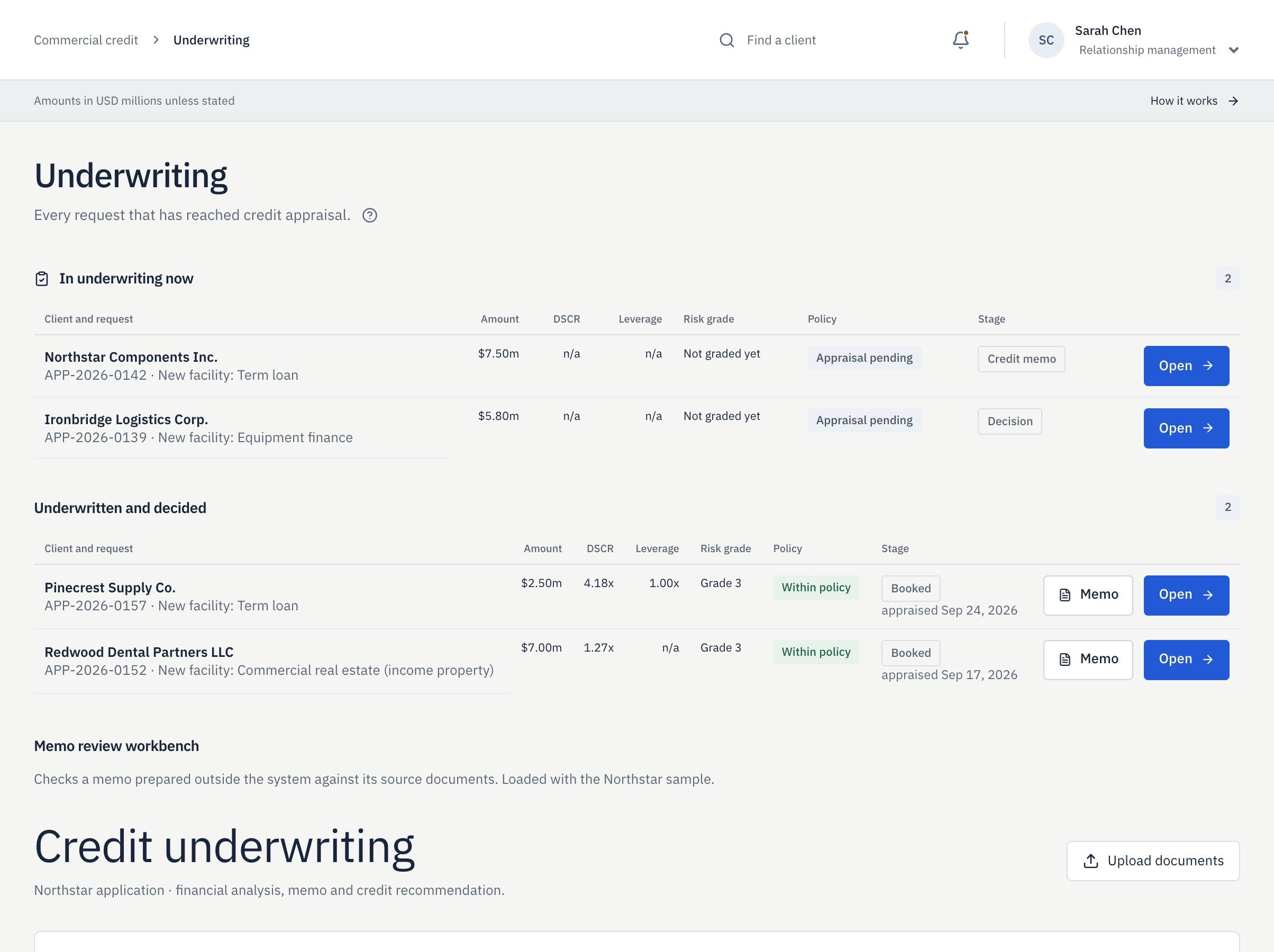
Your team points Aarvion at the client's document folder. It reads the financial statements, spreads them into your template and attaches a page reference to each line. When the analyst clicks a figure, they see where it came from. Items that need a decision are flagged for the analyst rather than guessed silently.
Once the analyst confirms the spread, Aarvion uses it to build the rest of the analysis: a product-specific appraisal for the type of facility, the bank's policy tests, collateral evidence and a debt service schedule. That schedule covers retained, refinanced and proposed facilities and shows the next 12 months of contractual principal and interest, including balloon payments.
What stays with your analyst
The analyst owns the spread. Aarvion drafts it and shows its sources, but nothing moves forward until a person confirms it. Analysts can change any mapping, correct any value and add their own notes. Judgment on unusual items, such as one-time gains, owner compensation or related-party transactions, stays with the people who know the borrower.
Every AI action is checked against your bank's own credit rules. Each step is recorded with who proposed it, which rule applied, who approved it and when, so a reviewer can follow how the spread was built.
How it connects to the rest of the loan
Spreading is one part of Aarvion Commercial Credit, which covers a loan from request to repayment. Intake assembles the application and lists missing documents. The confirmed spread feeds the credit memo, the calculated risk grade and the approval route. After closing, the same financial data supports covenant testing and the annual review.
Aarvion is built for credit teams at banks, credit unions and commercial lenders. It works alongside your existing loan platform and core banking system. It does not replace them. Most banks start with a 90-day pilot on one workflow and one loan segment, such as spreading for commercial real estate renewals.
Commercial Credit
Credit memo software that drafts from your confirmed spread
Commercial Credit
Loan risk rating software that keeps the reviewer's grade
Commercial Credit
Annual loan review software that drafts reviews before they're due
Guide · 7 min read
What Is Loan Spreading? A Plain-English Guide to Financial Spreading