What is a credit memo?
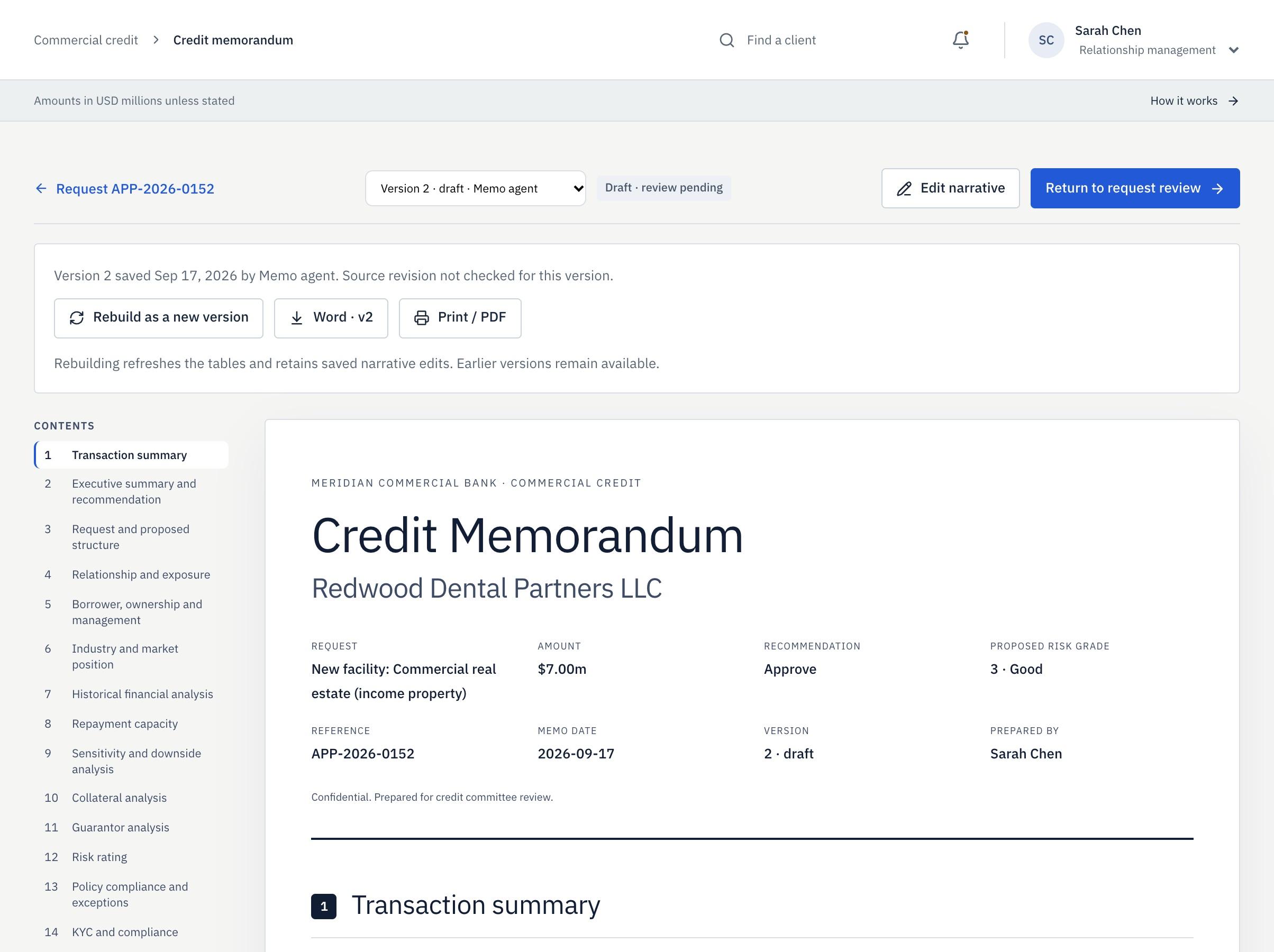
A credit memo, also called a loan presentation or credit approval memo, is the document that asks an approver to make a lending decision. It describes the request, the borrower and its management, the industry, the financial performance, repayment capacity, collateral, guarantors, policy exceptions, the risk grade and the recommendation.
The memo is how a credit officer makes the case, and how an approver or committee decides. It is also the record a loan reviewer or examiner reads later to understand why the bank said yes.
Why writing the memo takes so long
Most of a credit memo restates facts that already exist somewhere else: the spread, the debt schedule, the collateral file, prior memos and the request itself. Credit officers spend hours copying figures into tables, checking that the numbers in the narrative match the numbers in the spread, and reformatting for the committee template. When the borrower sends a revised statement or the terms change, parts of the memo have to be redone.
- Figures are retyped from the spread and the debt schedule
- Narrative and tables drift out of sync after edits
- Each committee has its own format
- Late term changes force rewrites
How Aarvion drafts the credit memo
Aarvion starts from the confirmed spread, the product-specific appraisal, the policy test results, collateral evidence and the debt service schedule. It drafts the memo sections in your bank's format and pulls figures straight from that confirmed analysis, so the tables match the spread.
The narrative is editable. Your credit officer rewrites any section, adds context only they know and removes anything that does not belong. Each version is saved, so you can see what changed between drafts. When the memo is ready, export it to Word or PDF for the committee pack.
What stays with your credit officer
The recommendation belongs to the credit officer. Aarvion drafts, but the officer edits and signs the memo, and nothing goes to an approver without that signature. The view on management quality, the borrower relationship and how to structure the deal stays with the people accountable for it.
Every AI action is checked against your bank's own credit rules. If a step needs a specific signer, it is held for that person. Each action is recorded with who proposed it, which rule applied, who approved it and when.
How the memo connects to grading and approval
The memo carries the calculated risk grade and the reviewer's assigned grade, kept separate. Once signed, the request routes to the right approver under your delegated authority matrix, based on exposure and grade. The approver records the outcome, rationale and any conditions. Those approved terms are later compared with the signed agreement at closing.
Aarvion is built for credit teams at banks, credit unions and commercial lenders, and works alongside your loan platform and core. Most teams start with a 90-day pilot on one workflow, such as renewal memos for one loan segment.